
The Tale of Two Saharas
Every year thousands of travellers arrive in Morocco with the same dilemma — Erg Chigaga or Erg Chebbi? Two deserts, two completely different experiences, and usually just one trip to choose between them.
We have been guiding people through both for over ten years. And the question we get asked more than any other — more than “is it safe”, more than “what should I pack” — is this one.
Whether you searched “erg chigaga vs erg chebbi” or “erg chebbi vs erg chigaga” — same question, same answer. Both are part of Morocco’s extraordinary sahara desert experience, and both deserve to be understood on their own terms. So here is what we actually think, after a decade of watching people experience both.
The 50-word honest summary: Erg Chebbi near Merzouga is the accessible, iconic Sahara — 150m orange dunes reachable by any car, luxury camps from $30 to $900, ideal for first-timers and families. Erg Chigaga near M’Hamid is the remote, wild Sahara — 40km of dunes up to 300m, requiring a 4×4, offering silence and Bortle Class 2 dark skies.
Before we go further, a quick note on terminology. An erg is a sand sea — a vast expanse of wind-shaped dunes. A hammada is stony desert, the flat rocky plateau you cross to reach the ergs. Both Erg Chebbi and Erg Chigaga rise dramatically out of hammada, which is part of what makes arriving at either of them feel so cinematic.
Table of Contents
Quick Comparison — Erg Chebbi vs Erg Chigaga at a Glance
| Feature | Erg Chebbi (Merzouga) | Erg Chigaga (M’Hamid) |
|---|---|---|
| Tallest dune | ~150 metres | 90m to 300m (varied) |
| Access | Paved road all the way | 60km off-road 4×4 required |
| Drive from Marrakech | 9–10 hours | 11–12 hours |
| Vibe | Popular, well-organised, convenient | Wild, remote, deeply silent |
| Best for | First-timers, families, photographers | Adventurers, repeat visitors, stargazers |
| Crowds | Significant in peak season | Minimal year-round |
| Price range | $30 budget to $900 luxury | Mid to high — 4×4 adds cost |
| Stargazing | Good | Exceptional (Bortle Class 2) |
| Wi-Fi at camp | Some luxury camps have it | Generally disconnected |
| Unique features | Gnawa music, mineral museums | Lake Iriqi, nomadic families |
Erg Chebbi — The Iconic Dunes of Merzouga
There is a reason Erg Chebbi appears on more screensavers, more travel magazine covers, and more Instagram grids than any other desert in Morocco.
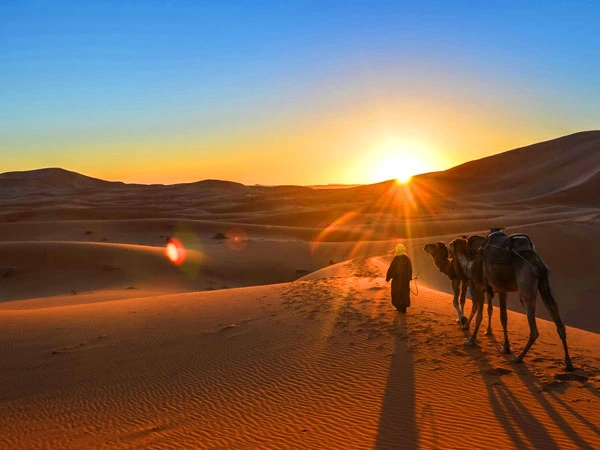
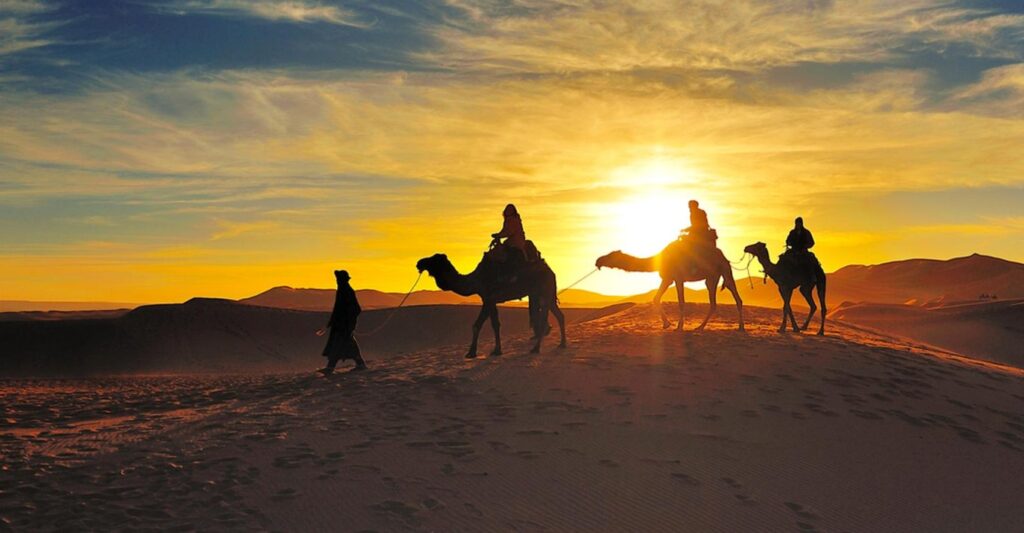
The dunes are orange. Not brownish, not yellowish — genuinely, properly, vividly orange in a way that makes photographers slightly unhinged at golden hour. The colour comes from iron oxide in the sand — the same mineral that makes rust red — which gives Erg Chebbi its signature appearance and makes it visually unlike any other desert we know. They rise like a sand wall directly out of the flat stony hammada, climbing steeply to around 150 metres at the highest point. The visual impact when you first see them is immediate and a little disorienting — you are driving through nothing interesting and then suddenly there they are, these enormous amber walls appearing out of nowhere.
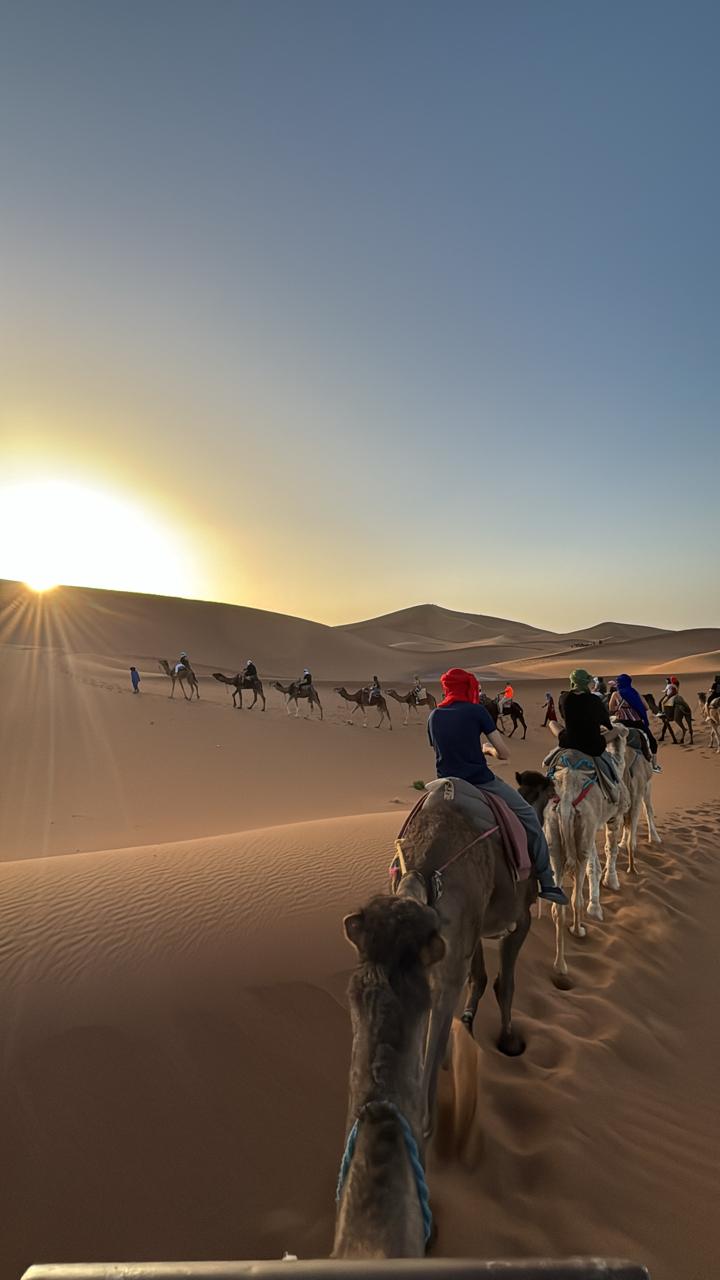
The colour shifts through the day. Pale gold in the morning, deepening to copper by midday, and then burning orange and deep red as the sun drops. If you time a camel ride right — late afternoon, heading towards the high dunes with the light coming in sideways — it looks almost fictional. Like someone turned the saturation up.
Getting there is genuinely easy. Paved roads from Marrakech, Fes, and all major Moroccan cities. Standard rental car. Even buses run to Merzouga. No special preparation, no specialist vehicle, no local guide required to actually reach the dunes. Walk out of your accommodation and you are on the sand in minutes.
The infrastructure at Erg Chebbi is the most developed of any desert camp area in Morocco. Budget travellers can find a basic tent with shared facilities for around $30 a night. At the other end of the market, ultra-luxury setups with private pools, air conditioning, restaurant service, and genuine hotel-quality beds run to $900 or more per night. The range in between is wide and the competition between operators keeps quality reasonably honest across all price points.
The flip side of all this convenience is that you share it. Erg Chebbi receives a significant volume of tourists during peak season — October through April — and on popular dune peaks at sunrise you will be sharing the moment with others. The glow from Merzouga village and the lights of the camps create some ambient light that affects stargazing conditions near the dune edge. The village itself can feel busy and occasionally pushy with operators approaching new arrivals.
Things that make Erg Chebbi worth visiting beyond the dunes themselves: the village of Khamlia, about ten kilometres away, where the Gnawa community performs traditional music in an informal, genuinely moving setting. The mineral and fossil museums in nearby Erfoud, which are more interesting than they sound. Sandboarding on the high dunes, which gets addictive faster than most activities in Morocco. And the simple pleasure of watching the Sahara desert Morocco light show at the end of a long day — that particular colour the sky goes over the dunes just after sunset, when everything turns purple and the first stars appear.
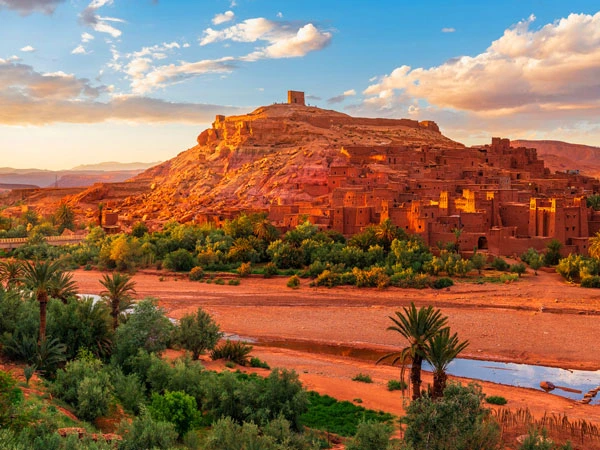
Ready to experience Erg Chebbi? Our 3-day Marrakech to Merzouga tour is one of our most popular routes — crossing the High Atlas, stopping at Ait Benhaddou, and arriving at the orange dunes in time for sunset on day two.
Erg Chigaga — The Remote Wilderness
Getting to Erg Chigaga is part of the experience. Not in a marketing-speak way — actually, genuinely part of it.
From M’Hamid El Ghizlane, the last town with a paved road at the end of the Draa Valley, the route to the dunes covers roughly 60 kilometres of off-road desert track. A proper 4×4, a knowledgeable local guide, and around two hours of bumpy, exhilarating travel across what the guides here call the moonscape — flat hammada that looks identical in every direction, with the occasional rocky outcrop and the track shifting underfoot depending on how recently the wind has been through. There are no signs. There is no GPS signal in parts of it. People without local knowledge do get disoriented here. This is not hypothetical — two travellers die annually attempting this route unguided.
Arriving at Erg Chigaga after that journey has a specific quality that Erg Chebbi — for all its drama — cannot fully replicate. You have earned the view.
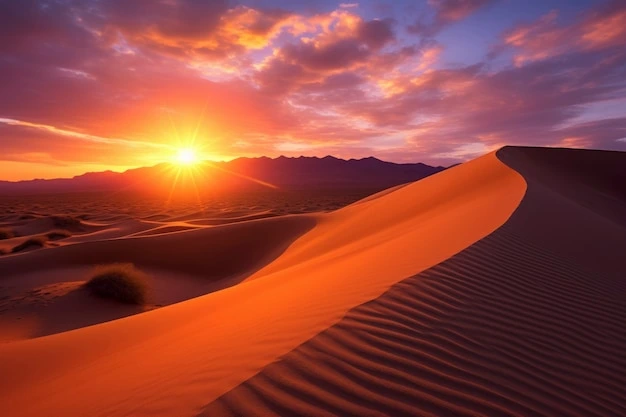
The dunes themselves are different in character. Erg Chigaga covers a larger surface area than Erg Chebbi — stretching roughly 35 to 40 kilometres in length — and while some peaks reach 300 metres, the landscape is more varied and sculptural, with what geographers call star dunes: multi-armed formations that look different from every angle and create a chaotic, dramatic topography that photographers with a more adventurous eye tend to prefer. The colour is golden rather than orange, shifting through amber and copper as the light moves.
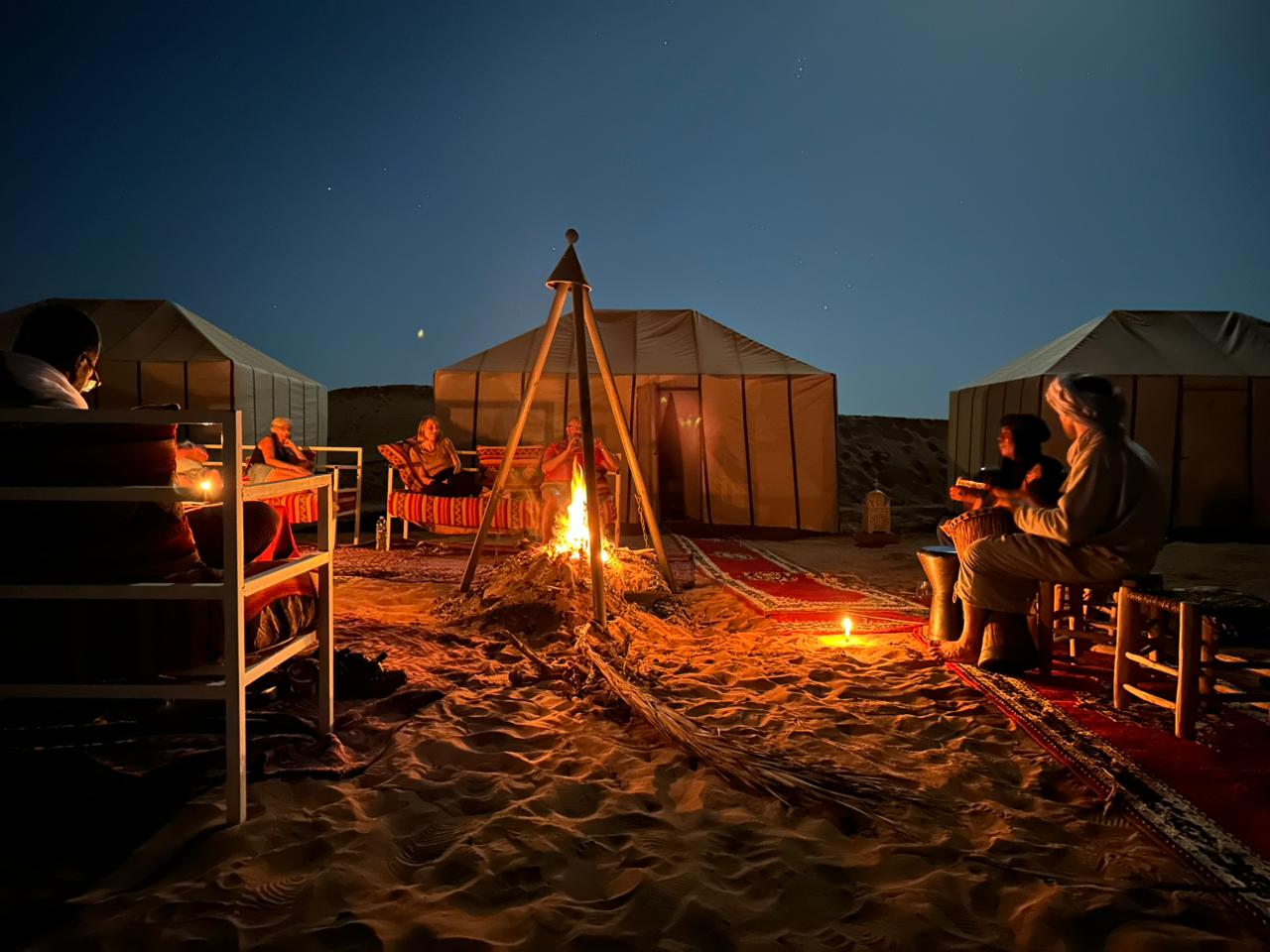
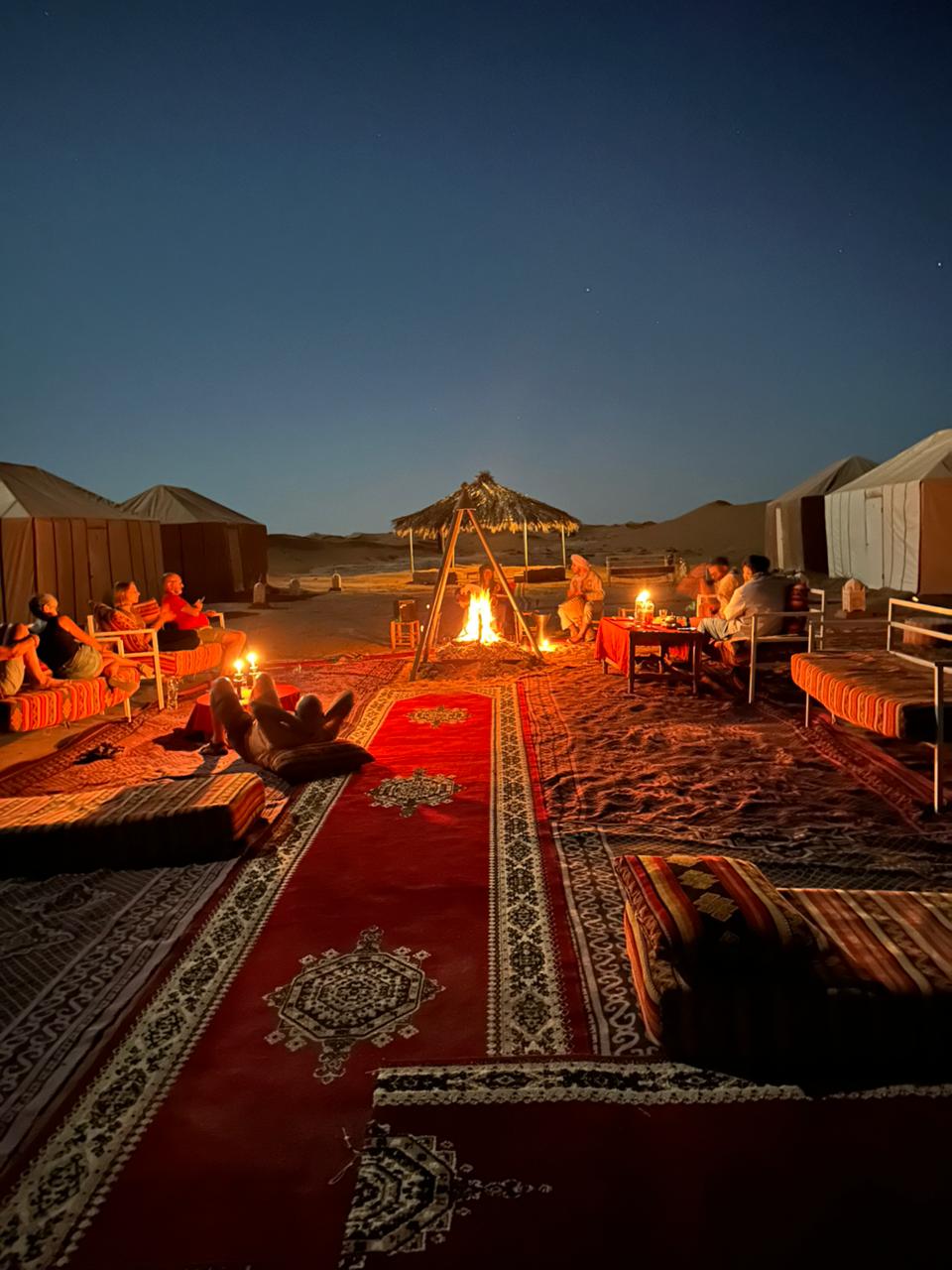
The silence at Erg Chigaga is the thing people talk about most when they come back. Because the camps are spread across such a vast area, you can spend two full days without seeing another group. No ambient noise from other tourists. No distant generator hum from the next camp. The desert at 3am out there is something that is genuinely difficult to describe and that stays with people for a long time afterwards.
One story that stays with us. Last October we took a couple from London to Erg Chigaga for their honeymoon. They had visited Erg Chebbi two years earlier and wanted something deeper. On the second night our guide woke them at 2am to look at the sky. They stood outside the tent for forty minutes without speaking. She told us afterwards she had never felt so small in the best possible way. That is the difference between the two deserts in one story.
Want to experience Erg Chigaga for yourself? We offer several ways to get there — a 2-day Zagora desert tour for those short on time, a 3-day Zagora to Erg Chigaga desert tour for a proper immersive experience, or a 3-day camels dunes and nomadic tents tour if you want the full Berber experience. Coming from Marrakech? Our 2-day Marrakech to Erg Chigaga tour gets you there directly.
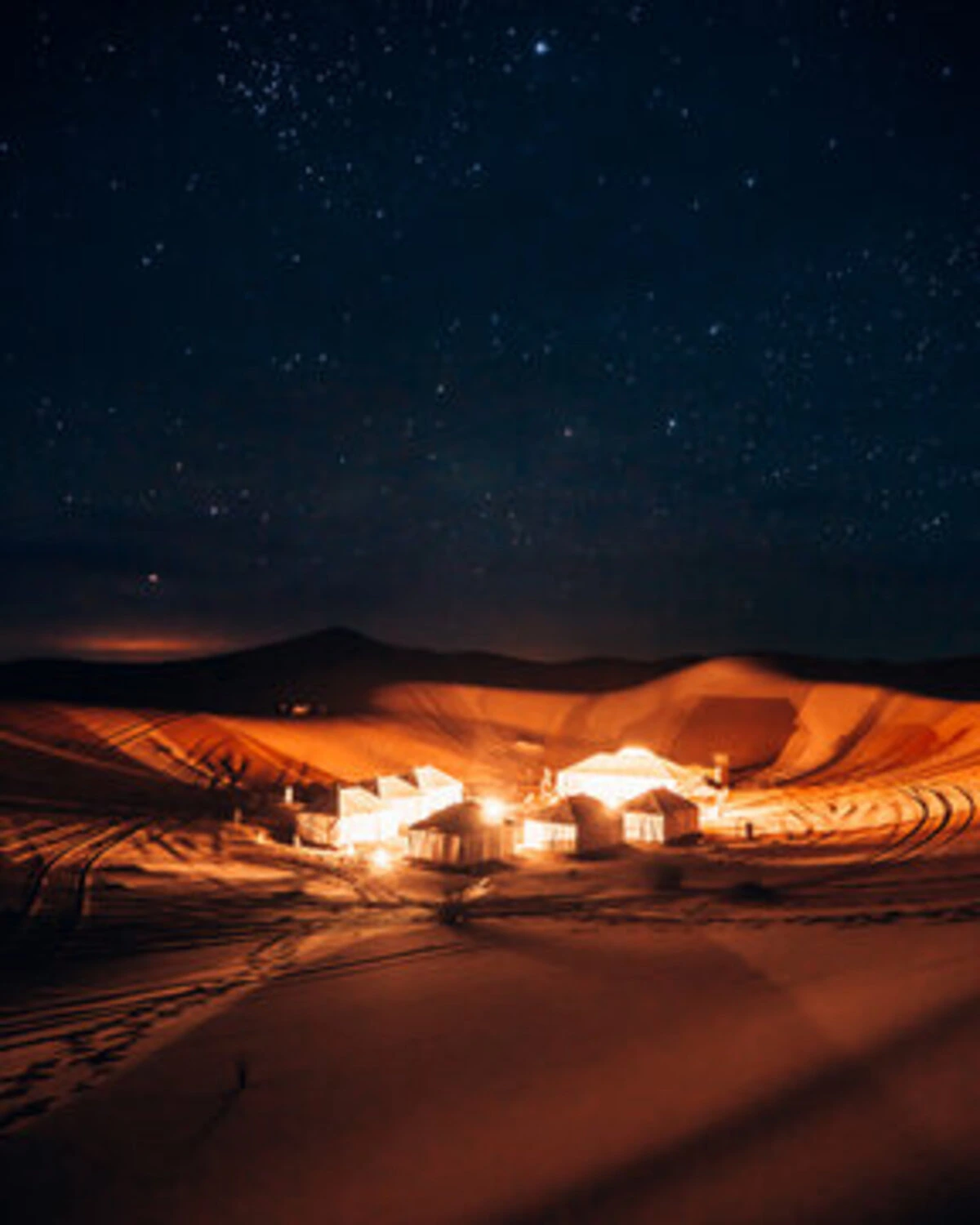
The stargazing is exceptional. Erg Chigaga sits at Bortle Class 2 on the light pollution scale — one of the darkest sky ratings available on earth. The Milky Way is not just visible but overwhelming on a clear moonless night, the kind of sky that makes you feel the planet actually moving under you if you stare at it long enough. We have watched grown adults step outside the tent on their first night and go completely silent. Every time, without exception.
Two things about Erg Chigaga that most travel articles miss:
Lake Iriqi is a seasonal salt lake on the edge of the erg that, in years with enough rainfall, reflects the dunes and the sky in a way that looks completely implausible. It appears and disappears depending on rainfall and the timing is never guaranteed, which is part of what makes seeing it feel like luck in the best sense.
The nomadic families who still move through this part of the desert are occasionally encountered on longer tours — Berber families who have been navigating this landscape for generations. With a guide who knows the area well, a brief visit to a nomadic camp is occasionally possible and is an experience with a weight to it that is hard to get anywhere else in Morocco.
The practical considerations: Erg Chigaga costs more than Erg Chebbi at comparable quality levels because the 4×4 transport and specialist guiding are non-negotiable parts of the experience. The off-road journey is bumpy enough that it is worth considering for very young children or anyone prone to motion sickness. And the camps, while we are proud of them, are fewer in number — so booking ahead matters more here than at Erg Chebbi.
Which One Is Right for You?
Rather than a simple verdict, here is an honest breakdown by situation.
If you have 3 to 4 days: Go to Erg Chebbi. The logistics of reaching Erg Chigaga and doing it properly require more time, and a rushed Erg Chigaga experience misses the point of going there. Our 3-day Marrakech desert tour is the perfect introduction to the Moroccan Sahara.
If you have 5 to 7 days: Erg Chigaga becomes the right choice, or the hybrid route (more on that below). Our 5-day Morocco itinerary gives you enough time to sit in the silence, do a proper overnight camel trek, and experience the stargazing without feeling like you need to rush back.
Photographers: Erg Chebbi for the iconic orange colour and dramatic height, especially if you want recognisable Morocco desert experience shots. Erg Chigaga for clean, uncluttered compositions — no other tents in frame, no tourist footprints on your dune face, and the star dune formations that look unlike anything else in Morocco.
Families with young children: Erg Chebbi. Easier access, wider range of accommodation that suits families, shorter camel rides, and the infrastructure to handle logistics that are harder with small children in very remote locations.
Couples and honeymooners: Erg Chigaga, without question. The privacy is not just available — it is the default. Dinner for two in a luxury tent with nothing visible in any direction except the dunes and the Milky Way overhead is a difficult experience to improve on. Our 3-day Zagora to Erg Chigaga tour is particularly popular with couples.
Repeat visitors who have already seen Erg Chebbi: Erg Chigaga. Go deeper. You will understand immediately why. Start with our tours from M’Hamid for the most direct access to the dunes.
The Pro Move — How to Visit Both
If you have seven days and a tolerance for long drives, the hybrid itinerary is one of the most satisfying routes in Morocco. It is not for everyone — the driving is significant — but it gives you a direct comparison of two very different desert characters that makes both more vivid, not less.
The route runs roughly like this: Marrakech → Dades Valley (overnight, worth it for the gorges) → Erg Chebbi near Merzouga (two nights minimum) → Tagounite (transit day, the Draa Valley is genuinely beautiful) → Erg Chigaga near M’Hamid (two nights minimum) → Foum Zguid → back to Marrakech.
The contrast when you arrive at Erg Chigaga after Erg Chebbi is striking. The silence lands differently when you have just come from somewhere busier. The scale of the dunes registers differently. And the stargazing on your first night at Erg Chigaga, after the relative light pollution of Merzouga, makes a particular impression.
Most guests who do this route tell us it was one of the better travel decisions they made. The combination of the iconic and the remote, experienced back to back, is more than the sum of its parts.
Logistics and Timing — What You Actually Need to Know
When to go: October through April is the sweet spot for both deserts. Temperatures are manageable — warm days, cold nights, and that particular quality of desert light that makes everything look like a painting. July and August regularly hit 48°C in both locations. It is not just uncomfortable — it is genuinely dangerous for anyone not acclimatised. We steer people firmly away from midsummer.
What to pack: This matters more than most travellers expect. The desert temperature swings between daytime heat and cold nights that catch people off guard even in April. Layers are essential — a warm fleece or jacket for after sunset even in what feels like warm weather. Wind protection for the eyes matters more during sandstorms than most people anticipate; a lightweight scarf or shemagh that covers the face is more useful than sunglasses alone. Camera gear needs dust protection — fine sand gets into everything. Bring more than you think you need and seal everything in bags when not in use.
Booking: Book your camp in advance, particularly for Erg Chigaga where options are fewer. Avoid booking on arrival in M’Hamid or Merzouga — the operators who approach new arrivals in town are not always the ones running the best or most ethical camps. A reputable operator confirmed before you travel is worth the effort. Ask specifically about camel welfare if this matters to you — ethical treatment varies between operators and it is worth asking the question directly. The Moroccan National Tourist Office also provides official guidance on responsible desert tourism if you want an independent reference.
Questions People Ask Us
Which is bigger — Erg Chebbi or Erg Chigaga? Erg Chigaga is larger in surface area, stretching roughly 35 to 40 kilometres. Erg Chebbi is taller at its highest point — around 150 metres compared to Erg Chigaga’s more varied profile of 90 to 300 metres depending on location.
Can I drive myself to Erg Chigaga? No — and this is not a formality. The route from M’Hamid requires a real 4×4, sand-driving experience, GPS knowledge, and genuine familiarity with desert navigation. The track shifts after wind. There are no markers. Two people die annually attempting this without a local guide (source: Moroccan civil protection authority desert incident records). Book with a reputable operator and go with someone who knows the route personally.
Is there Wi-Fi in the desert? At Erg Chebbi, some luxury camps have satellite Wi-Fi. At Erg Chigaga, you are generally disconnected — which most guests, once they arrive, stop minding surprisingly quickly.
What is the difference between erg and hammada? An erg is a sand sea — the dunes. A hammada is stony desert, the flat rocky terrain you cross to reach the ergs. Both Erg Chebbi and Erg Chigaga rise out of hammada, which is part of what makes arriving at them feel so dramatic.
Is Erg Chigaga safe? Completely safe with proper organisation — a local guide and a reliable 4×4. Not safe without them. With a reputable operator, it is a well-managed experience. We have been running these tours for over ten years without incident. Browse our guided Erg Chigaga tours here.
Which has better stargazing? Erg Chigaga, clearly. Its Bortle Class 2 dark sky rating puts it among the best stargazing locations on earth. Erg Chebbi offers good stargazing by most standards but has some ambient light from Merzouga village that Erg Chigaga simply does not have.
Best time of year for either desert? October to April for both. March and April are particularly good — warm, clear, and the desert after occasional winter rains can have a particular quality of light that is hard to describe. Full month-by-month guide here →
Still not sure which one is right for you? That is exactly what we are here for. Drop us a message and we will give you an honest answer based on what you are actually looking for — not a sales pitch, just a real recommendation from people who know both deserts well.
👉 All Morocco desert tours 👉 Contact us | 📞 +212 678-444071
More from the blog: Complete Guide to Morocco Desert Tours 2026 → · How to Get to Erg Chigaga → · Morocco Desert Packing List → · What to Expect on a Morocco Desert Tour → · Best Time to Visit Morocco Desert →