Is the Morocco Desert Tour Experience Actually Worth the 10-Hour Drive?
Okay, let’s just get this out of the way right now — yes, it is. Completely and totally worth it. But here’s the thing nobody tells you upfront: the Morocco desert tour experience is not quite what those dreamy Instagram reels make it look like. And that’s actually a good thing, because the reality is better in ways that are harder to photograph.
The drive from Marrakech to Erg Chigaga? That’s 560 kilometres and somewhere between 8 and 10 hours in a car. Merzouga clocks in at around 9 hours. I know, I know — that sounds like a lot. And if you get in the car expecting to arrive quickly, you’re going to have a bad time. But if you go in knowing the drive is part of the experience? You’ll be staring out the window the whole way with your jaw slightly open, wondering why nobody mentioned the Atlas Mountains looked like this.
We’ve been taking people into the Moroccan Sahara for over ten years. In that time we’ve watched hundreds of first-timers step off a camel on their second morning, look out at the dunes, and just… go quiet for a bit. In a good way. Every single time. The morocco desert tour experience does that to people.
Worth it? Yeah. We’ve never seen anyone leave unchanged.
Quick Summary — Morocco Desert Tour Experience 2026:
Here’s the short version if you’re in a hurry: plan for at least 2-3 nights, get private transport if you can swing it, expect a sunset camel ride on arrival and a sunrise that’ll mess you up emotionally. Best months: October to April. Most remote option: Erg Chigaga. Best for first-timers: Erg Chebbi near Merzouga. Budget: €200-550 per person for a private tour. Red flag to avoid: 1-night rush tours and any booking platform hiding shuttle fees in the small print.
Table of Contents
Which Desert Should You Actually Go To?
Morocco’s got four main desert options and they’re genuinely quite different from each other. The morocco desert tour experience you get at each one is completely different — here’s the honest rundown with no sugar-coating:
Merzouga (Erg Chebbi) — The One You’ve Seen on Instagram
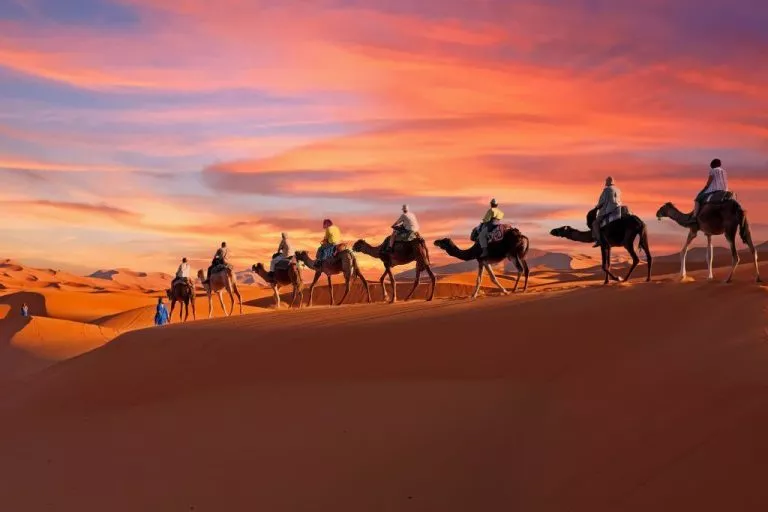
You know those photos. Giant orange dunes, dramatic sunset light, camels silhouetted against the sky. That’s Erg Chebbi. And honestly? It really does look like that. The orange colour comes from iron oxide in the sand — basically the same stuff that makes rust red — and the dunes hit about 150 metres tall. First impression is genuinely jaw-dropping.
Here’s the catch though: everybody knows about it. During peak season you’re sharing those dunes with quite a few other people. You can see other camps from your camp. The popular sunrise peaks have a queue. It’s a bit like visiting the Eiffel Tower — absolutely stunning, completely worth it, but don’t expect to have it to yourself.
For first-timers who want a gorgeous, well-organised, no-stress desert experience? Erg Chebbi is perfect. For people chasing solitude? Keep reading.
Good for: First-timers, families, people who specifically want that classic orange dune shot. Drive time: 9-10 hours from Marrakech. Fully paved, no drama. How long to stay: 2 nights minimum — one night really isn’t enough.
Zagora — The Sneaky Good Option
Zagora is only 6-7 hours from Marrakech, which in Morocco desert terms is practically next door. The landscape around the town is beautiful — the Draa Valley has these incredible palm groves and ancient kasbahs that feel genuinely timeless — but the dunes near Zagora are smaller than Erg Chebbi or Erg Chigaga.
The reason Zagora matters is what’s beyond it. It’s the last proper town before Erg Chigaga, which makes it the perfect jumping-off point for the most remote desert experience in Morocco. If you’re based here, you’re already at the Sahara’s front door — the big dunes are reachable the same afternoon.
Good for: Travellers without much time, or as a base for Erg Chigaga trips. Drive time: 6-7 hours from Marrakech. How long to stay: 1-2 nights.
Agafay — The Lazy (But Totally Valid) Option
Right, so Agafay isn’t technically a sand desert. It’s a rocky hammada plateau about 30-45 minutes outside Marrakech. No towering dunes here — just dramatic pale rock, dry riverbeds, and views of the Atlas Mountains in the distance.
But here’s why people love it: some seriously luxurious camps have set up out there with infinity pools, proper restaurants, and glamping setups that feel like they should be in a design magazine. If you want a desert-adjacent evening — sunset cocktails, stargazing from a comfortable camp bed — without spending three days in a car, Agafay delivers.
Just be honest with yourself about what it is. It’s not the Sahara. It’s a beautiful rocky landscape with excellent sundowner potential. If you’ve got the time, go further south. If you’ve got one evening? Agafay is genuinely lovely.
Good for: Day trips, luxury glamping, anyone with 48 hours or less. Drive time: 30-45 minutes from Marrakech. How long to stay: Half a day to one night.
M’Hamid and Erg Chigaga — The Real Deal
Okay, now we’re talking. This is our home turf and we’re not even slightly embarrassed about being biased here, because the facts back us up.
M’Hamid El Ghizlane is where the paved road stops. Literally ends. After that it’s 60 kilometres of off-road desert track to Erg Chigaga — the biggest, most remote desert in Morocco. The dunes stretch 40 kilometres and reach 300 metres in places. Local Berber guides call the biggest one “The Father Dune.” You’ll get it immediately when you see it.
Because getting here takes effort, it filters the visitors. The camps are spread across a huge area, which means real privacy — on most nights you won’t see another camp from yours. The sky is Bortle Class 2, which is basically as dark as it gets on this planet. The Milky Way doesn’t just appear — it dominates the sky in a way that makes you feel the planet rotating under you if you stare at it long enough.
You do need a 4×4 and a guide who knows the route. The track shifts after wind. Don’t try this independently — people get seriously disoriented out there without local knowledge.
Good for: Repeat visitors, stargazers, couples wanting privacy, anyone who’s done Erg Chebbi and wants to go deeper. Drive time: 8-10 hours to M’Hamid, then 2 hours off-road to the dunes. How long to stay: 2 nights minimum. 3 is better. 4 is if you never want to leave.
👉 Full Erg Chigaga vs Erg Chebbi comparison here →
Shared Tour vs Private Tour vs Going It Alone — Let’s Be Real
How you get to the desert shapes the morocco desert tour experience significantly — more than most people realise before they book.
Shared Tours — The Budget Option (With Caveats)
Shared tours run about €150-250 per person and you’ll be in a minibus with other travellers. For solo travellers who want to meet people this can actually be great — the shared experience creates a certain camaraderie that private tours don’t always have.
The honest downsides though: you move at the group’s pace, which isn’t always your pace. There are often stops at commission-based shops — carpet sellers, argan oil cooperatives — where the guide gets a cut and you get a 40-minute detour you didn’t ask for. The vehicles are usually large minibuses that handle hairpin mountain roads with all the grace of a shopping trolley.
Fine if budget is the priority. Go in knowing what you’re signing up for.
Private Tours — Worth It More Often Than You’d Think
Private tours cost €200-550+ per person depending on how long you go and where you stay. For couples the per-person cost is often only slightly more than shared — you’re splitting a vehicle and a guide between two people rather than twelve.
What you get: your own pace, your own stops, zero carpet shops unless you specifically want one, and a proper 4×4 for the off-road sections. For families especially, the flexibility is genuinely worth the premium.
The Flight Option Nobody Talks About
Here’s a fun fact that most travel blogs completely ignore: there are direct flights between Marrakech and Zagora. Takes about 45 minutes. Bypasses the entire mountain crossing.
Now look — the drive through the Atlas Mountains is spectacular and we recommend doing it at least once. But if the 10-hour car journey genuinely isn’t feasible for health reasons, or you’re travelling with very young children, or you simply cannot afford the time — flying is a legitimate option. It just gets less attention because it’s less romantic to write about.
The Real 3-Day Itinerary — What Actually Happens
Day 1 — The Mountain Crossing
Leave Marrakech around 7-8am. The city disappears faster than you’d expect and within an hour you’re climbing into the High Atlas via the Tizi n’Tichka pass at 2,260 metres. In winter there can be snow up here. In spring it’s green and dramatic. Always, it’s the kind of road that makes you want to stop every twenty minutes to take a photo — which you will do, don’t fight it.
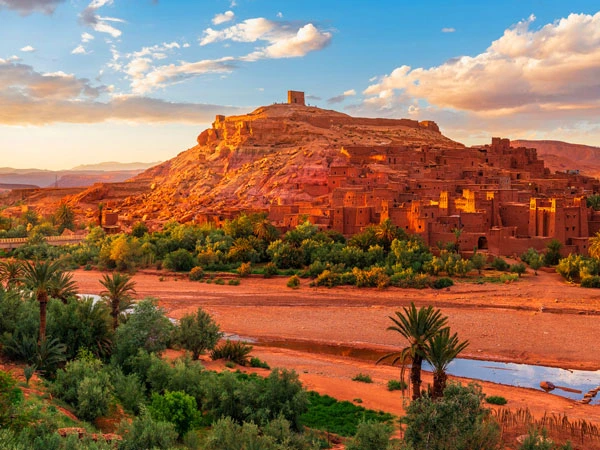
Mid-morning brings Ait Benhaddou — a UNESCO kasbah that’s been in Gladiator, Game of Thrones, and Lawrence of Arabia. It looks almost too cinematic to be real. Worth at least an hour. Avoid the 11am-2pm tourist crush if you can.
After Ouarzazate the landscape does this thing where it just… opens. The mountains fall away, the terrain goes flat and stony, and the Draa Valley palm groves appear like someone dropped a green ribbon across the desert. Most people aren’t expecting how beautiful this part is.
Arrive at camp in late afternoon — ideally 4-5pm — for that golden hour light on the dunes. This timing is not accidental.
Day 2 — The Desert Day (The One That Gets You)
No driving. Just desert. This is the day that defines the morocco desert tour experience for most people.
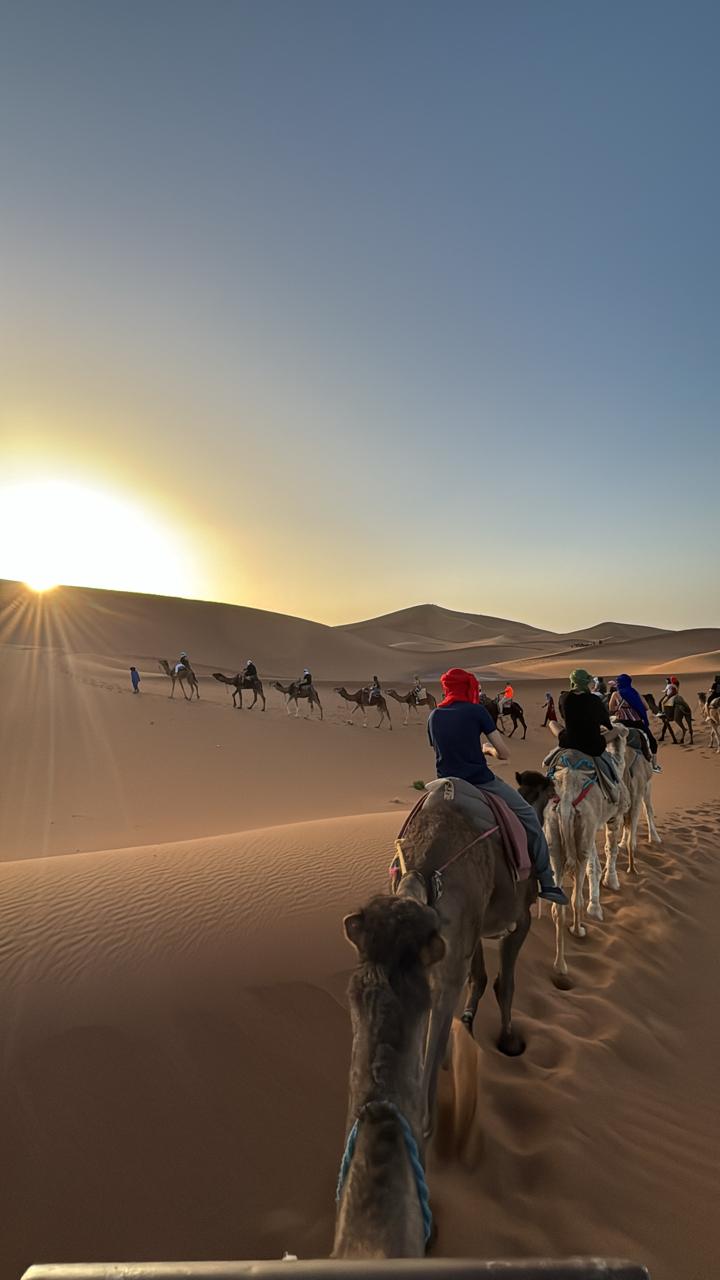
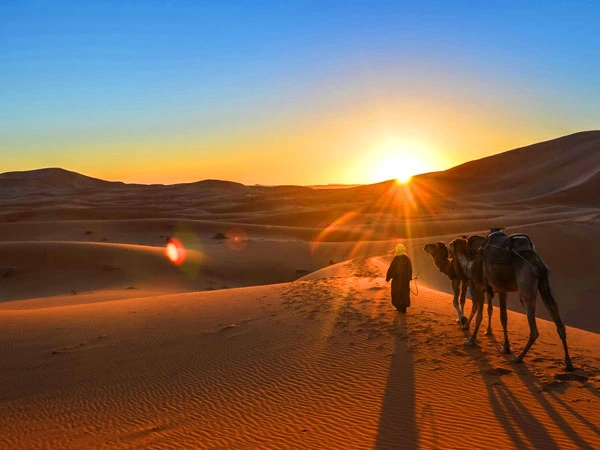
Set an alarm for before sunrise — around 5:30am. You won’t want to. Do it anyway. The desert at that hour is pink and gold and impossibly quiet and every single person who does it is glad they did. Without exception.
The morning camel trek or dune walk happens in this light. After breakfast, the day becomes unstructured — and here’s something interesting: most guests who are used to busy itineraries find this unexpected free time genuinely difficult for about twenty minutes, and then profoundly good. There’s nowhere to go. Nothing to do. Just the desert, and you in it.
Afternoon rest. This is the Berber approach to the hottest part of the day and it turns out to be extremely correct. Late afternoon the light shifts, the photography window opens, and the dunes go golden again.
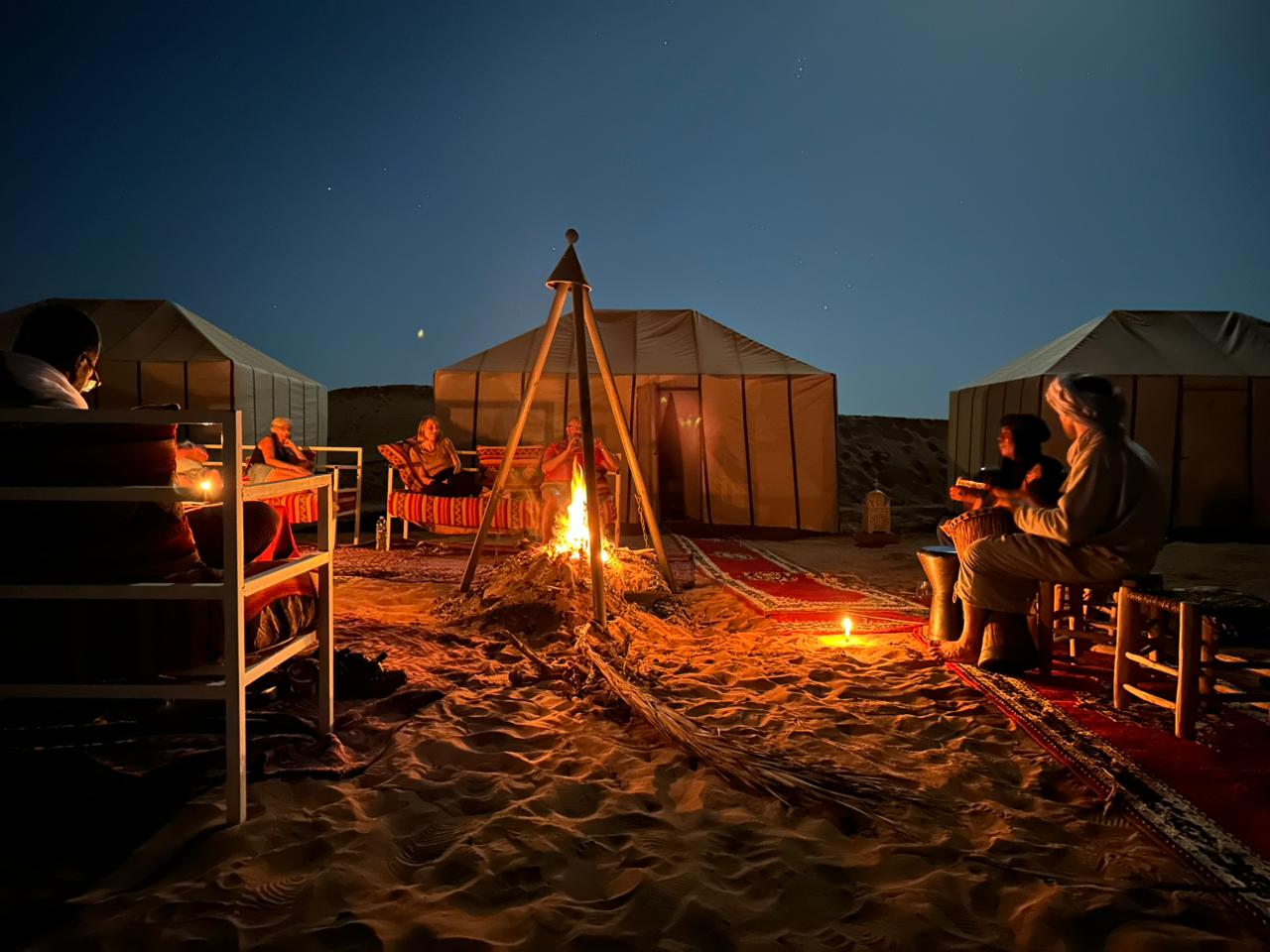
Dinner. Fire if it’s cold. Music if the mood takes it. Stars from about 10pm onwards. The second night in the desert is when most people say something clicked — when the novelty wore off and what was left was just the place itself. This is the night people remember.
Day 3 — The Long Way Home
The return is long. There’s no getting around this. The road doesn’t get shorter just because you’ve had a transformative experience in the desert. Snacks, music, and realistic expectations — you’ll be back in Marrakech by evening.
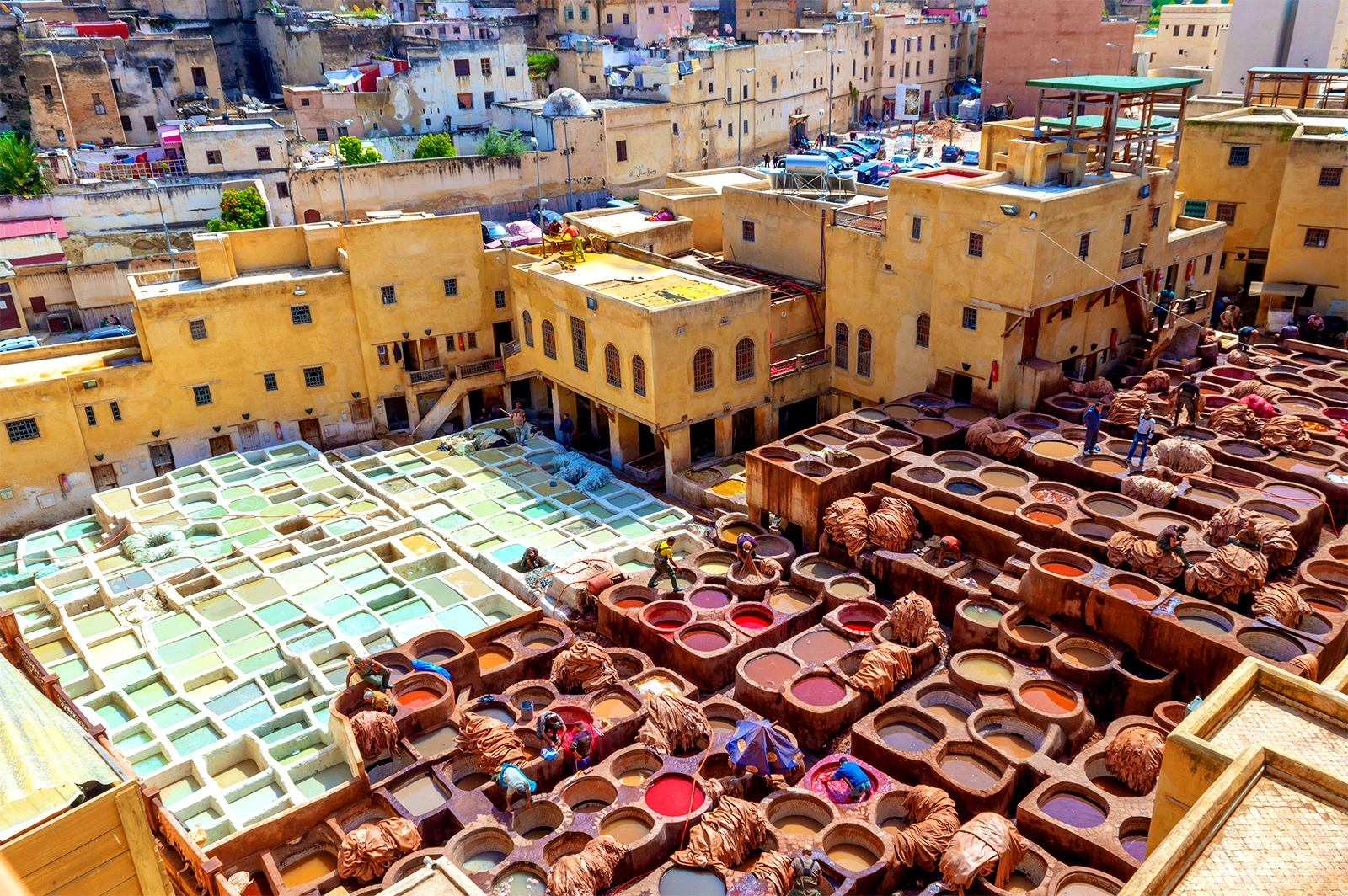
Some guests do the route one-way — entering from Marrakech and exiting toward Fez, or vice versa. This avoids retracing the same road and adds variety. Slightly more complicated to arrange but worth considering for longer itineraries.
What “Luxury Desert Camp” Actually Means (Because It Varies a Lot)
Right, this is important because the word “luxury” in desert camp marketing covers everything from “slightly nicer than basic” to “genuinely excellent.” The accommodation you choose shapes your entire morocco desert tour experience more than any other single factor.
Here’s what actual luxury looks like: a real bed with a proper mattress and good quality linen (not a floor mattress on a rug), a private en-suite bathroom with a hot shower and an actual porcelain toilet, some electricity for phone charging (solar-dependent so not always 24/7), and food that’s properly cooked rather than thrown together.
Here’s the warning: some camps advertised as luxury on major booking platforms are managed by third parties who tack on “shuttle fees” of €60-120 per person after booking. These aren’t included in the room price and only appear in the fine print. Always ask for the total cost including all transfers before you confirm anything.
Our camps are ones we’ve used and continue to inspect personally. We don’t recommend anywhere we haven’t been ourselves.
10 Things I Genuinely Wish Someone Had Told Me
After ten years of guiding first-timers through the morocco desert tour experience, here are the things guests most consistently wish they’d known beforehand:
1. Camel riding is more uncomfortable than it looks. The mounting process involves the camel lurching forward and then back in a way that nobody is prepared for the first time. Hold on. Once moving it’s gentle enough, but after an hour most people have sore inner thighs. This is normal. Keep rides reasonable in length.
2. It gets cold. Like, properly cold. Even in April. Even after a 30°C afternoon. The desert temperature can drop 15-20 degrees after sunset. People who packed only summer clothes are always the ones quietly asking if there are any spare blankets. Pack a proper warm layer, every single time.
3. The mountain roads will test you if you’re prone to motion sickness. Countless hairpin turns through the Atlas. If this is you, take medication before departure — not halfway through when it’s too late. Sit in the front seat. Most people find it resolves once the mountains are behind you.
4. Budget about €100 extra for things not included. Lunch is almost never in the tour price. Add in tips for guides and camp staff (€10-15 per day per guide is appropriate), water for the journey, and any spontaneous extras. The €100 covers this comfortably for most people.
5. WiFi in the deep desert is basically a myth. Some camps have satellite internet. It’s slow, it drops constantly, and some days it doesn’t work at all. Plan to be offline. Most guests are initially mildly annoyed by this and then extremely glad about it by day two.
6. Vegans need to be specific and persistent. Moroccan cuisine defaults to meat in ways that aren’t always obvious from the description. “Vegetable” dishes can contain chicken broth. Some samosas that look vegetarian have meat inside. Tell your operator clearly before the tour and remind the camp again on arrival. Good operators handle this without difficulty — just give them the heads up.
7. The drive is the experience. Don’t sleep through it. The landscapes between Marrakech and the Sahara — the Atlas Mountains, the Draa Valley, the ancient kasbahs — are extraordinary. Stare out the window the whole way. You’re not in transit. You’re already on the trip.
8. One night is never enough. We say this every time and people still book one night sometimes. Almost every single person who does it wishes they’d booked two. The second night is when the desert stops being a tourist experience and starts being something else. Two nights minimum. Please.
9. Your guide knows things that aren’t in any guidebook. The guides who lead these tours grew up in the desert. They know the stars by name in Berber, Arabic, and French. They know which plants survive on almost no water and why. They know the stories of the families who still move through this landscape. Have the conversations. They’re some of the best parts of the trip.
10. Put the phone down sometimes. The desert is one of the few places left where being fully present is genuinely easy. The photos will be good either way. The experience of being there without a screen between you and it is better.
Solo Female Travel — The Honest Version
The morocco desert tour experience is safe for solo female travellers and the desert communities are welcoming. But honest advice beats empty reassurance, so here’s what we’d actually tell a friend:
Don’t book with anyone who approaches you on the street. Djemaa el-Fna touts, people outside your riad — skip them. Reputable operators have verifiable online reviews and clear contact details. That accountability matters.
Filter reviews by traveller type. Most platforms let you see reviews specifically from solo women. That’s the relevant data for your situation — use it.
Some unwanted attention happens and it’s worth acknowledging. It’s not universal and depends heavily on which operator you go with. Setting firm, early, friendly-but-clear boundaries is effective in most situations. Staying with other travellers in the evenings and not being the last one awake with guides you don’t know well are practical rather than paranoid precautions. Trust your instincts.
All our guides are vetted, work with us season after season, and we’ve removed people from the team for this reason before. If anything feels off during a tour — contact us directly, any time.
What to Pack — The Actually Useful List
Packing right makes a real difference to your morocco desert tour experience — especially around temperature management which catches almost everyone off guard.
Whatever season, bring these:
A lightweight scarf or cheche — sun protection, sand shield, cold layer, face covering. It does everything and takes up no space. High-SPF sunscreen applied generously and frequently. Good sunglasses that actually seal around your eyes rather than sitting loosely on your face. A reusable insulated water bottle. Closed shoes for dune walking — not sandals, your feet will thank you.
Winter additions (December to February):
Thermal base layers that pack small. A proper warm jacket — not a fleece hoodie, an actual jacket. Gloves. A sleeping bag liner if you run cold. The desert at 2°C is not messing around and the layers genuinely matter.
Summer additions (June to August):
Electrolyte sachets — non-negotiable in extreme heat. Loose, light-coloured long sleeves that breathe. A small portable fan for the midday rest. More water than you think you’ll need.
Tech:
Portable power bank — assume limited electricity at camp. A tripod if you’re serious about astrophotography — the sky genuinely justifies it. Camera with proper dust protection — fine desert sand gets into lens mechanisms faster than you’d believe. Offline maps downloaded before you lose signal in the Draa Valley.
Frequently Asked Questions
Here are the questions we get asked most often about the morocco desert tour experience:
Can I visit the Sahara in a day trip from Marrakech? Technically yes. Practically — it’s 9-10 hours of driving each way for maybe 2 hours at the destination. You’d spend 18 hours in a car to see the desert for about the length of a long lunch. Don’t do this. One overnight stay minimum. Two is significantly better.
Is a Morocco desert tour safe? Yes. Morocco is genuinely welcoming to tourists and the desert regions particularly so. Book with a verified operator, tell someone your itinerary, use your normal good judgement. You’ll be completely fine.
Merzouga or Zagora — which should I pick? Merzouga (Erg Chebbi) for the classic orange dunes and better infrastructure. Zagora as a base for Erg Chigaga tours or if you’re short on time. For the most remote and spectacular experience — M’Hamid and Erg Chigaga, no contest. Full comparison here →
What’s the best time of year to go? March to May and September to November. March and October are the sweet spot months. Full month-by-month guide here →
How much does it actually cost? Shared tours: €150-250 per person. Private tours: €200-550+ depending on length and accommodation level. Luxury camps add roughly €50-150 per night. Budget €100 extra for lunches, tips, and things not in the tour price.
What does “luxury camp” actually mean? A real bed with good linen, private en-suite bathroom with a hot shower and actual toilet, some electricity, decent food. Watch out for hidden shuttle fees (€60-120) on booking platforms — ask for the total all-in price before confirming.
Is camel trekking suitable for everyone? Most people yes. The mounting process is alarming the first time and extended rides leave you with sore thighs — keep it to 45 minutes to 2 hours. People with significant back or mobility issues should check with their operator first.
How long should I actually stay? One night if you genuinely have no choice. Two nights if you want to actually feel the place. Three or more if you want the experience that people struggle to describe afterwards. Our most popular first-timer option — 3 days from Zagora →
Ready to Go?
Look — the morocco desert tour experience is one of those things that’s genuinely hard to oversell because the reality keeps up with the hype. The drive is long. The cold at night catches everyone off guard. And the second morning in the desert does something to people that takes a while to explain when they get home.
We’re a small local team based in Zagora. We’ve been doing this for over ten years and we still find it remarkable. Message us and we’ll give you an honest recommendation based on your actual situation — budget, timing, travel style — not a sales pitch designed to get you to book the most expensive option.
👉 Browse all Morocco desert tours 👉 Most popular first-timer tour — 3 days Zagora to Erg Chigaga 👉 2-day Marrakech to Erg Chigaga 👉 Get in touch | 📞 +212 678-444071
More from the blog: Erg Chigaga vs Erg Chebbi → · Best Time to Visit Morocco Desert → · Morocco Desert Packing List → · How to Get to Erg Chigaga → · Complete Guide to Morocco Desert Tours →