
What to Pack for Morocco Desert Tour — Stop Overthinking It
Every year we watch first-time visitors arrive with enormous suitcases full of things they never touch, and without the three or four items that would have made a genuine difference. After ten years of guiding people through the Moroccan Sahara in every season and every kind of weather, we have a pretty clear picture of what actually matters.
This is not a list generated by someone who did a Google search and added a few affiliate links. This is what we actually tell guests before they leave — the honest, practical version with the things that matter and the things you can confidently leave at home.
Quick Answer — What to pack for Morocco desert tour: You need layers (the desert gets shockingly cold at night), a scarf or cheche, high-SPF sunscreen, closed shoes, a power bank, and electrolytes. Everything else is optional. The full list is below, broken down by category and season so you can pack exactly what you need.
Table of Contents
The One Item Nobody Mentions — But Everyone Needs
Before we get into the full Morocco desert packing list, let’s talk about the single most useful item you can bring — the one that comes up in almost every post-trip conversation we have with guests.
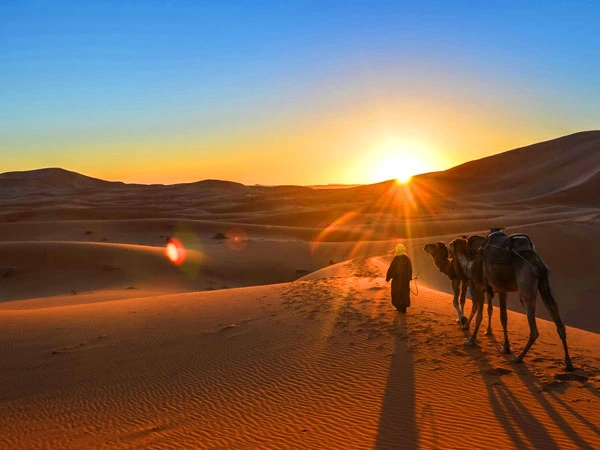
A lightweight scarf. Not a fashion scarf. A proper, large, breathable scarf — called a cheche in the Sahara — that wraps around your head and face.
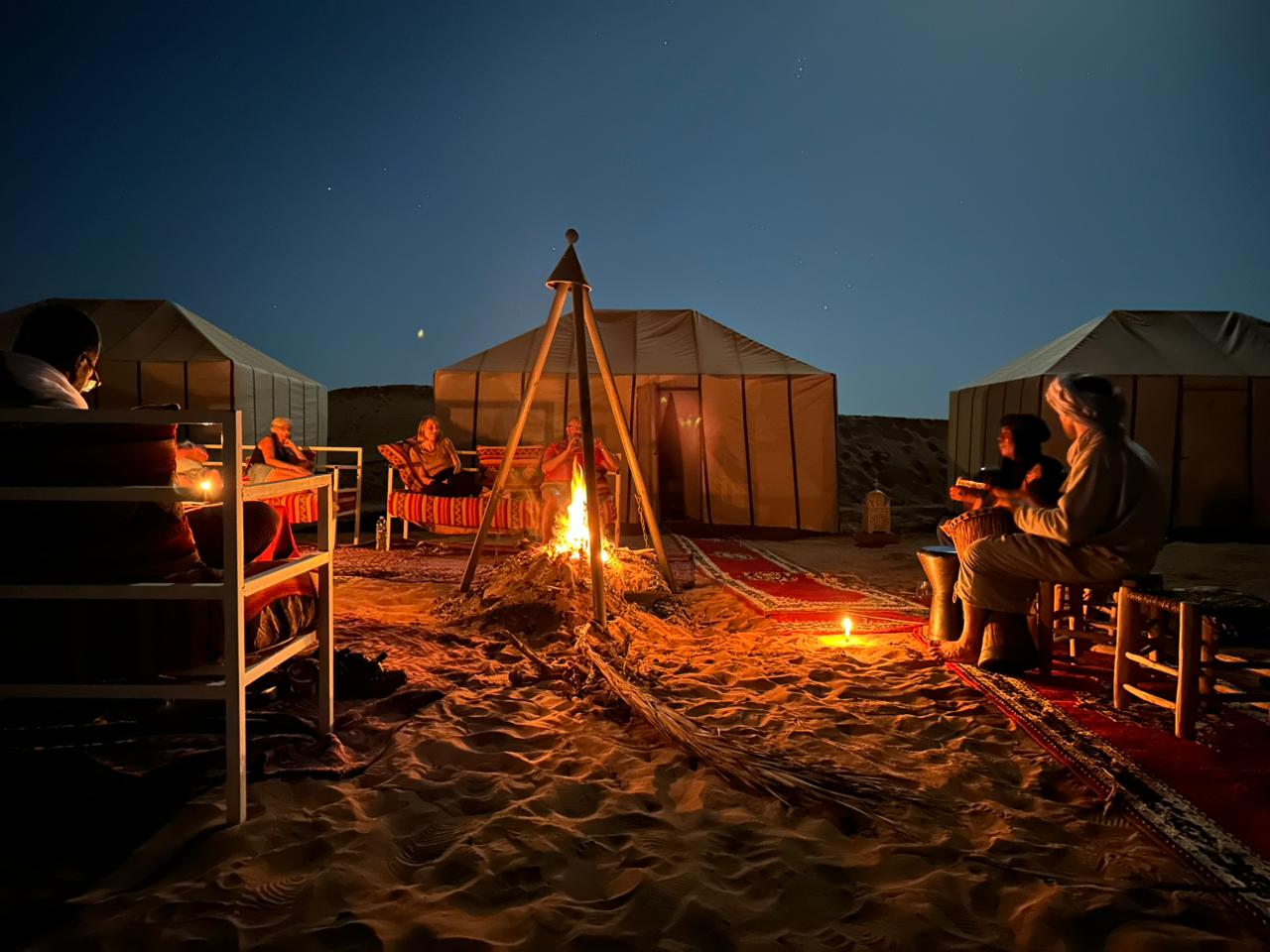
Here is why it matters so much: the desert is not just hot and sunny. It is windy, sandy, cold at night, bright enough to cause headaches, and occasionally home to sandstorms that arrive with almost no warning. A good cheche handles all of these situations. It keeps the sun off your neck during the day, the sand out of your face when the wind picks up, and the cold out at night when you are sitting around the camp fire.
You can buy one in any market in Zagora or Merzouga for a few euros. Or bring one from home — a large, lightweight cotton or linen scarf in a light colour works perfectly. Either way, do not arrive in the desert without one.
Clothing — What Actually Works in the Desert
Daytime Clothes
The desert is hot during the day — sometimes very hot, depending on the season. But the approach of dressing in as little as possible is actually wrong for several reasons. Exposed skin burns faster, heats up faster, and gets damaged by blowing sand. Light coverage is better than no coverage.
What to bring:
Light, breathable long-sleeved shirts in pale colours are the ideal daytime desert garment. Linen or technical fabrics work well — anything that allows airflow while covering your arms. Bring two or three of these.
Lightweight trousers or shorts — your preference, but know that trousers protect your legs from sun and sand. On the camels especially, bare legs against the saddle is not comfortable.
A good hat or cap that actually stays on in wind. Baseball caps work. Wide-brimmed hats work better for sun protection but can be annoying in wind. Pick one you will actually wear.
What NOT to bring:
Heavy jeans — they are uncomfortable in heat, take forever to dry, and add serious weight to your bag. Leave them in your city hotel.
Anything white — the desert is sandy and dusty and white clothes become brown clothes very quickly.
High heels, platform sandals, or anything without a proper sole — the dunes are soft and uneven and you will regret it immediately.
Night Clothes — This is Where People Get It Wrong
This is the section most packing guides skip entirely and it is genuinely important.
The desert at night is cold. Not “a bit chilly” cold — properly, significantly cold, even in spring and autumn. In March, a day that reached 30°C can drop to 8-10°C after midnight. In December and January, temperatures can hit freezing and below.
Most first-time visitors massively underestimate this. They pack for the heat they expect and then spend the night in the desert huddled in every layer they brought, wishing they had packed more.
What to bring for desert nights:
A proper warm jacket — not a light zip-up hoodie but an actual jacket with insulation. Down jackets pack small and are ideal. Fleece works well too.
Thermal base layers if you are visiting between October and March — the kind you can pack flat and barely notice in your bag but that make a huge difference at 2am.
Warm socks. The desert ground at night is cold and even inside the camp tent your feet will feel it.
A hat and gloves for winter visits (December to February) — this sounds extreme but is genuinely necessary.
Sun and Sand Protection
Sunscreen
High SPF — 50+ — applied generously and reapplied regularly. The desert sun is intense in a way that catches people off guard. The combination of altitude, clear skies, and reflected light from the sand means you burn faster here than almost anywhere else.
Bring more than you think you need. A 200ml tube per person for a 3-day trip is not excessive.
Sunglasses
Proper sunglasses that seal reasonably close to your face, not fashion sunglasses that sit loosely on the bridge of your nose. The distinction matters when sand is blowing. UV protection is important — look for lenses that block 99-100% of UV rays.
Polarised lenses are helpful for reducing glare off the sand surface, which can cause significant headaches on bright days.
Lip Balm with SPF
Consistently forgotten, consistently regretted. The desert air is dry and the sun is intense and cracked lips after the first day are both painful and preventable. Pack it.
Footwear — Get This Right
The footwear question comes up constantly and the answer is simpler than most people make it.
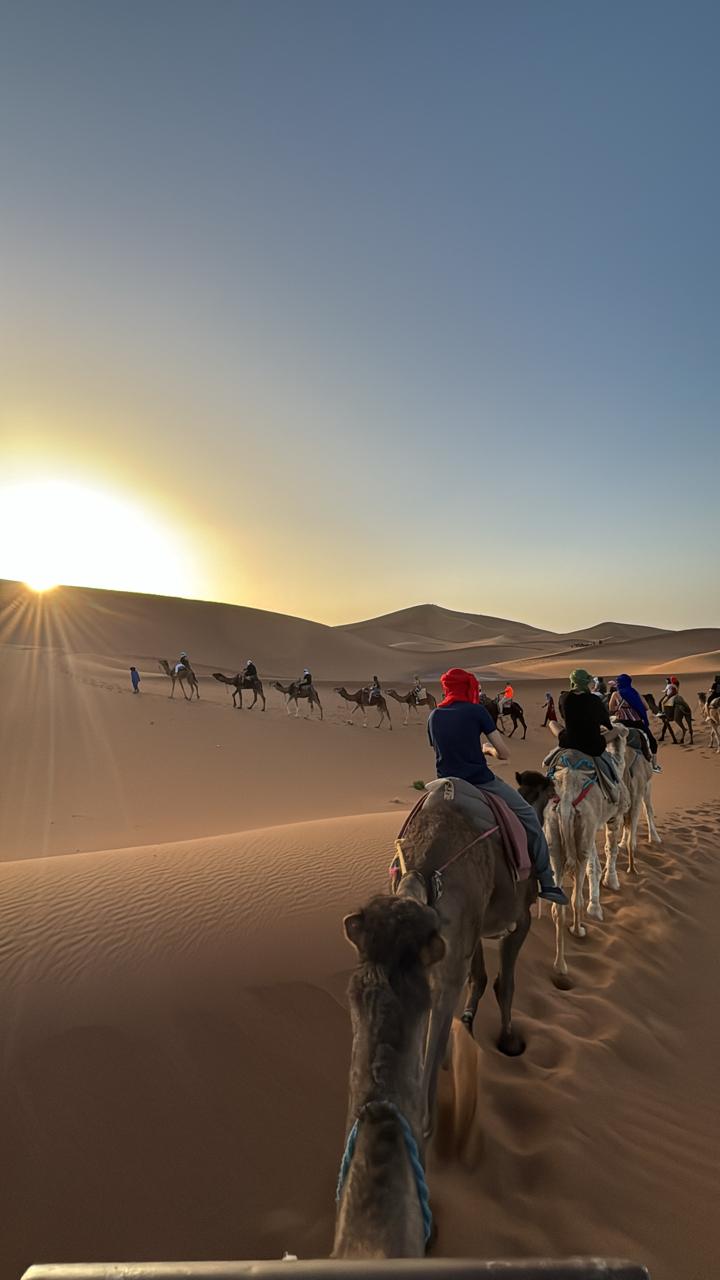
Closed shoes are non-negotiable for dune walking. Sand gets into open-toed shoes within about three steps and it is deeply uncomfortable. It also heats up significantly and can burn the skin between your toes. Wear proper closed shoes or trail running shoes when walking in the dunes.
For the camels specifically — you need shoes that stay on your feet securely. The camel mounting and dismounting process involves some lurching and your feet will be dangling without much control. Slip-on sandals are a bad idea here.
Our actual recommendations:
Trail running shoes or light hiking shoes with a closed toe — good grip, comfortable for walking on uneven sand, breathe reasonably well.
Sandals are fine for around the camp in the evening — just not for dune walking or camel riding.
Flip flops for the camp bathroom/shower area — worth packing a lightweight pair specifically for this.
Tech and Gadgets
Power Bank — Non-Negotiable
Most desert camps have some form of electricity — usually solar-powered and therefore limited and unreliable. Assume you will not be able to charge your phone or camera from the camp. Bring a power bank that can charge your devices at least twice.
A capacity of 20,000mAh is sufficient for most people for a 2-3 night trip.
Camera
Your phone camera will produce excellent desert photos — the light is so good that almost everything looks beautiful. If you are bringing a dedicated camera, protect it from dust carefully. Fine desert sand finds its way into lens mechanisms faster than most people expect.
A dust-proof bag or sealed ziplock bag for storage when not in use. A UV filter on the lens if you have one. Lens cloths — pack several, you will use them.
Tripod
If you are remotely interested in astrophotography, pack a small travel tripod. The Milky Way over Erg Chigaga on a clear moonless night is one of the most photographed skies in Morocco. A lightweight travel tripod takes up minimal space and the photos it enables are genuinely extraordinary.
Headlamp or Torch
More useful than a phone torch — you need both hands free at night in the desert and a headlamp makes navigating between tents and the bathroom facilities infinitely easier. Pack a small one with fresh batteries.
Offline Maps
Download offline maps of your route before you leave areas with mobile data. Signal disappears somewhere in the Draa Valley and does not reliably return until you are heading back north. This applies to both navigation and general map use.
Health and Safety
Hydration — This is the Big One
The desert dehydrates you faster than almost any other environment because the air is so dry and the temperatures so extreme. The sensation of thirst lags behind actual dehydration — by the time you feel thirsty you are already significantly dehydrated.
Bring:
A reusable insulated water bottle — keeps water cool for longer and reduces plastic waste. A minimum of 2 litres capacity.
Electrolyte sachets or tablets — essential for replacing minerals lost through sweating in extreme heat, especially in summer or during any strenuous activity. Oral rehydration salts work well and are available cheaply.
Basic First Aid
A small personal first aid kit with your usual medications, pain relief, any prescription medication you take regularly (bring more than you need in case of delays), and blister plasters — dune walking creates friction on feet in ways that ordinary walking does not.
Anti-diarrhoea medication — worth having even if you do not expect to need it. Dietary changes and unfamiliar food occasionally cause issues and being in the desert without it is genuinely uncomfortable.
Motion Sickness
If you are prone to motion sickness, take medication before the mountain crossing from Marrakech — not halfway through when it is too late. The Atlas Mountain roads involve significant winding sections. Sit in the front seat. Most people find the issue resolves once the mountains are behind them and the road flattens.
Packing List by Season
Spring Packing List (March to May)
Spring is the most popular season for a reason — mild days, cool nights, and the best desert light. Here is exactly what you need:
Light breathable long-sleeved shirts × 2-3, lightweight trousers or shorts, a warm jacket for evenings (temperatures drop significantly after sunset even in April), thermal base layer if you run cold, closed walking shoes, sandals for camp evenings, high-SPF sunscreen, sunglasses, cheche/scarf, power bank, water bottle, electrolytes, headlamp, basic first aid kit.
Autumn Packing List (September to November)
Very similar to spring. October specifically can have warm days and cold nights — the temperature swing is dramatic.
Same as spring list plus: slightly warmer jacket (October nights can be genuinely cold), extra warm layer for camp evenings.
Winter Packing List (December to February)
Winter is underrated and beautiful but requires proper preparation for the cold.
Everything on the spring list plus: thermal base layers (essential, not optional), proper insulating jacket, gloves, warm hat, warm socks, sleeping bag liner if you run cold.
Summer Packing List (June to August)
Summer in the desert is extreme. If you are going — and we generally advise against it unless you are prepared — pack accordingly.
Everything on the spring list plus: loose long-sleeved shirts in the lightest fabrics you can find, extra sunscreen (reapply every 90 minutes minimum), electrolytes (bring double what you think you need), electrolyte-based sports drinks, cooling cloth, portable fan.
What NOT to Bring
This section exists because overpacking is genuinely as much of a problem as underpacking — and most packing guides only tell you what to bring.
Leave these at home:
Heavy denim jeans — uncomfortable in heat, heavy in your bag, take forever to dry.
Hair dryer or straighteners — no power in most desert camps and the desert air makes both pointless within minutes of stepping outside.
Valuable jewellery — dust, sand, and camel riding are not kind to delicate items.
Excessive toiletries — you will shower once at most during a 2-3 day desert trip. Pack travel sizes of the essentials.
High heels or dress shoes — no context in which these are useful in the desert.
More than two pairs of shoes — the space is not worth it.
Multiple bags — one manageable bag per person. The 4×4 journey to Erg Chigaga is bumpy and your bags will be in the back of the vehicle.
Packing for Different Trip Lengths
1-2 Night Morocco Desert Trip
Keep it minimal. A medium-sized daypack or small backpack is sufficient. You need: 2 outfit changes maximum, all the essentials from above, minimal toiletries. Resist the urge to bring a full suitcase for a 2-night stay.
3-5 Night Morocco Desert Trip
A medium-sized bag — not a large suitcase. Add one or two extra clothing changes, slightly more sunscreen, extra electrolytes. You still do not need as much as you think.
7+ Night Morocco Desert Trip
For longer trips you can bring more but the principle stays the same — focus on layers and sun protection, travel light on everything else. Consider that longer trips often involve more driving and a lighter bag means more comfort in the vehicle.
The Complete Morocco Desert Trip Checklist
Print this, tick it off, leave nothing behind:
Clothing:
- Light long-sleeved shirts × 3
- Lightweight trousers × 1-2
- Warm jacket (insulating)
- Thermal base layer (Oct-Mar)
- Warm socks × 2 pairs
- Underwear × 3-4
- Gloves and warm hat (Dec-Feb)
- Cheche/scarf (essential)
- Closed walking shoes
- Sandals for camp
Sun and sand protection:
- High-SPF sunscreen (50+) × 1 large tube
- Quality sunglasses
- Wide-brimmed hat or cap
- Lip balm with SPF
Tech:
- Power bank (20,000mAh)
- Phone charger cable
- Camera + memory cards + lens cloths
- Travel tripod (optional but recommended)
- Headlamp + spare batteries
- Offline maps downloaded
Health and hydration:
- Insulated water bottle (2L+)
- Electrolyte sachets × 6-10
- Personal medications
- Pain relief
- Anti-diarrhoea medication
- Blister plasters
- Hand sanitiser
- Motion sickness medication (if needed)
Documents and money:
- Passport
- Travel insurance documents
- Emergency contacts written down
- Cash in dirhams (cards not accepted in the desert)
Frequently Asked Questions
What to pack for Morocco desert tour if I am only going for one night? Minimal is the right approach. One change of clothes, a warm layer, sunscreen, sunglasses, a scarf, your phone and power bank, a water bottle, and basic toiletries. A daypack is sufficient.
What to wear in the Morocco desert as a woman? Light, breathable, covered. Long sleeves and trousers are practical for sun protection, camel riding comfort, and cultural respect in the villages along the route. A scarf is versatile and useful. Avoid white or very light colours that show dust immediately.
Can I buy things I forget in Morocco? Yes — Zagora and Merzouga both have small markets and shops. A cheche/scarf is actually better bought locally where the quality is good and the price is fair. Sunscreen is available but expensive and often not high enough SPF. Bring sunscreen from home.
Do I need a sleeping bag? Most camps provide blankets which are sufficient for spring, summer and autumn visits. For winter (December-February) a sleeping bag liner adds meaningful warmth. A full sleeping bag is rarely necessary unless you are camping independently.
What shoes are best for camel riding? Closed shoes with a secure fit that stay on your feet without active gripping. Trail runners or light hiking shoes. The camel mounting process involves lurching and you want shoes that stay put.
Is there anything specific to pack for Erg Chigaga vs Erg Chebbi? Erg Chigaga tends to be slightly hotter and windier than Erg Chebbi due to its location. Pack the cheche particularly carefully for Erg Chigaga — the wind can be stronger there. The off-road journey to Erg Chigaga is bumpy, so pack bags that close securely. Read our full comparison →
What is the best time of year to visit and does it change what I need to pack? Significantly yes — winter requires proper thermal layers while summer requires extreme heat preparation. Full seasonal packing guide here →
Ready to Pack and Go?
The Morocco desert packing list does not need to be complicated. Layers for the temperature swing, sun protection, a good scarf, closed shoes, and a power bank. Everything else is secondary.
If you are still not sure what to bring for your specific trip — the season, the duration, the destination — drop us a message. We are based in Zagora and have been answering this question for ten years. We will give you a specific recommendation for your exact situation in about two minutes.
👉 Browse our Morocco desert tours 👉 3-day Zagora to Erg Chigaga tour 👉 3-day Marrakech desert tour 👉 Contact us | 📞 +212 678-444071
More from the blog: Morocco Desert Tour Experience → · Best Time to Visit Morocco Desert → · Erg Chigaga vs Erg Chebbi → · How to Get to Erg Chigaga → · Complete Guide to Morocco Desert Tours →